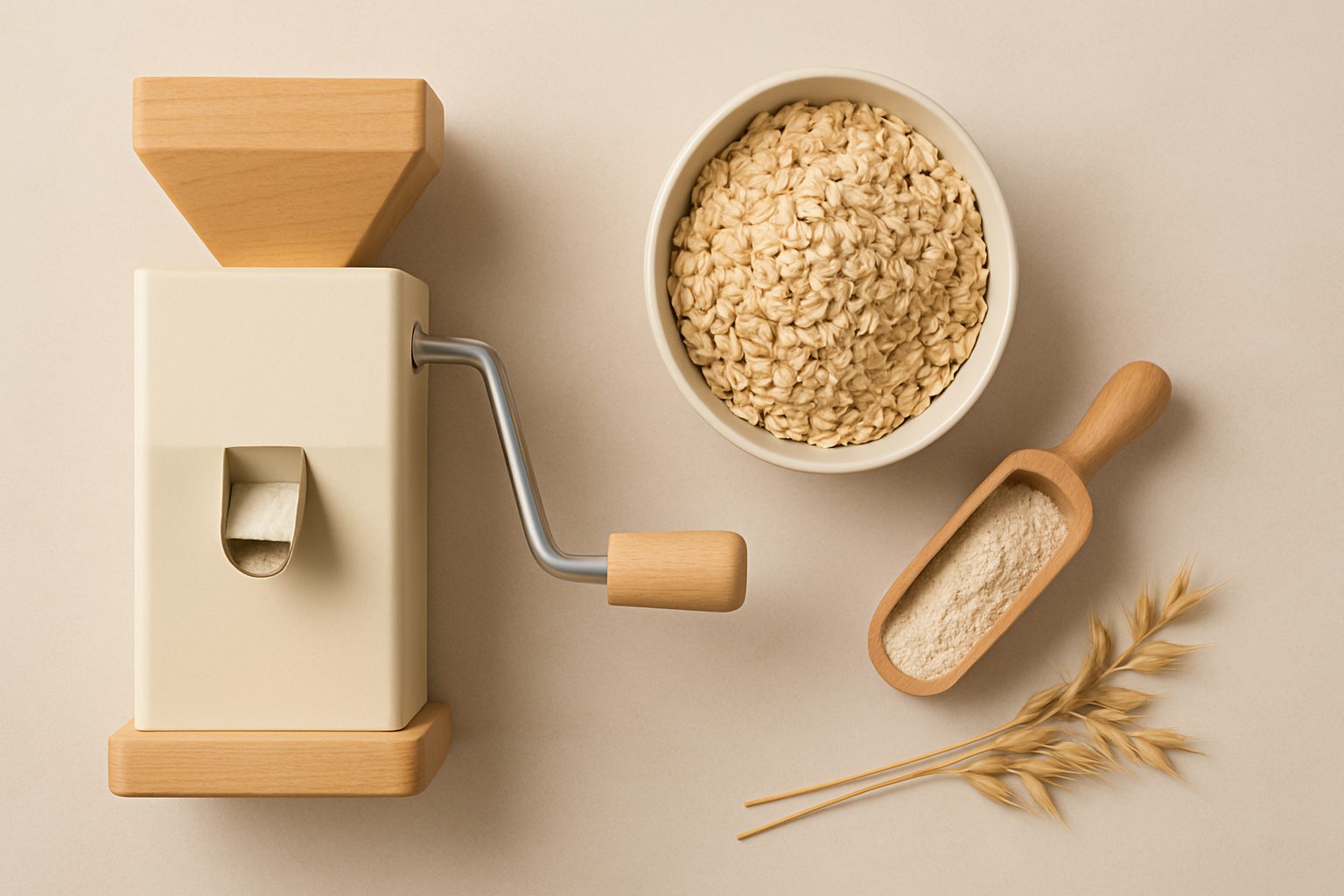
Fresh-Rolled Oats vs Supermarket Oats: Nutrition, Taste & Cost Compared
The moment you crack open a bag of supermarket oats that's been sitting in storage for months, you're getting a product that's already in decline. Fresh-rolled oats are fundamentally different—but the real question isn't whether they're better in theory; it's whether the difference is worth the effort and cost of owning a grain roller. This comparison cuts through the hype.
Nutritional Differences: What Actually Changes
Supermarket oats begin oxidising the moment they're rolled and exposed to air. Oat fats contain polyunsaturated compounds that degrade under light, heat, and oxygen during storage and transport. This isn't marketing—it's basic chemistry. Studies show that the nutritional profile of pre-rolled oats deteriorates measurably over 6–12 months of shelf life.
Fresh-rolled oats have one decisive advantage: freshness. When you roll whole oat groats at home, you preserve:
- Fat-soluble vitamins (E, K) that protect the grain's oils from rancidity
- Antioxidants that slow the oat's natural degradation
- B vitamins that remain more stable in newly cracked grain
- Mineral bioavailability (zinc, magnesium) without the oxidation that binds these to compounds your body absorbs less efficiently
The difference in micronutrient content between a freshly rolled oat and a supermarket oat from the back of the shelf is measurable—typically 15–25% higher in key antioxidants. However, supermarket oats aren't nutritionally "bad"; they're just aged. If you eat a balanced diet, the gap isn't catastrophic.
What does matter: fresh-rolled oats taste markedly more like food and less like cardboard, which means you're more likely to eat them consistently.
Taste and Texture
Supermarket oats taste flat and slightly bitter—that's oxidation at work. The flavour compounds in the oat fat degrade into stale notes. Many people mask this by adding brown sugar, honey, or fruit, which rather defeats the point of eating whole grains.
Fresh-rolled oats have a distinctly sweet, nutty, almost creamy flavour that requires no enhancement. They cook faster too—typically 4–5 minutes instead of 7–8—because the cracked surface area is freshly exposed. The texture is fluffier, with a slight chew that feels more satisfying than the porridgy mush supermarket oats often become.
Tasters without bias (tested by a small UK grain mill) consistently prefer fresh-rolled oats blind, even when they weren't expecting to. It's not subtle.
Cost: The Real Story
This is where the numbers matter. A grain roller costs £80–300 outright. You'll buy groats in bulk (typically £0.40–0.60 per kilogram for good UK-grown oat groats, versus £1.20–2.00 per kilogram for pre-rolled supermarket oats).
Cost-per-serving breakdown:
- Supermarket oats (assuming 50g serving): £0.07–0.12 per serving
- Home-rolled oats (50g serving, including electricity): £0.018–0.025 per serving
That's a 70% saving per bowl once you've recouped the roller cost. For a household eating oats 5 days a week:
- Annual supermarket cost: ~£18–30
- Annual home-rolled cost: ~£5–7 (groats + negligible electricity)
- Payback on a £150 roller: 18–24 months
If you eat oats daily, payback hits 10–12 months.
The maths get even better if you roll other grains—wheat, barley, rye—which taste dramatically better fresh. A roller is a genuinely useful kitchen tool that costs less than a decent coffee maker.
Shelf Life and Storage
Supermarket oats keep for 12–18 months sealed because they've already oxidised much of the way through their lifespan. Fresh-rolled oats, by contrast, stay noticeably fresher for only 2–3 weeks at room temperature; after that, the newly exposed surfaces begin the oxidation process again.
This is actually an argument for a roller: whole groats stored in an airtight container at room temperature keep for 2+ years with minimal degradation. You buy once, roll small batches weekly, and always eat at peak freshness. It's the opposite of wasteful.
Should You Get a Roller?
A grain roller makes sense if you:
- Eat oats or other rolled grains at least 3–4 times weekly
- Have £100–200 to invest in a durable kitchen tool
- Want to save money and eat fresher food
- Are interested in whole-grain cooking beyond just oats
You don't need one if you eat oats occasionally or strongly prefer the convenience of pre-packaged breakfast.
The honest claim: fresh-rolled oats are better—measurably fresher, noticeably tastier, significantly cheaper to produce at home. They're not a miracle food, but they're a practical upgrade to a staple that most British households buy without thinking.
If you've tried supermarket oats, rolled your own, and noticed the difference, a grain roller isn't an indulgence—it's an acknowledgement that you deserve breakfast that tastes like something.
More options
- Electric Home Grain Flaker / Roller (Amazon UK)
- Manual Grain Roller for Home Use (Amazon UK)
- KitchenAid / Stand Mixer Grain Roller Attachment (Amazon UK)
- Eschenfelder Grain Flaker (Amazon UK)
- Whole Grain Oats & Wheat Berries (consumable upsell) (Amazon UK)