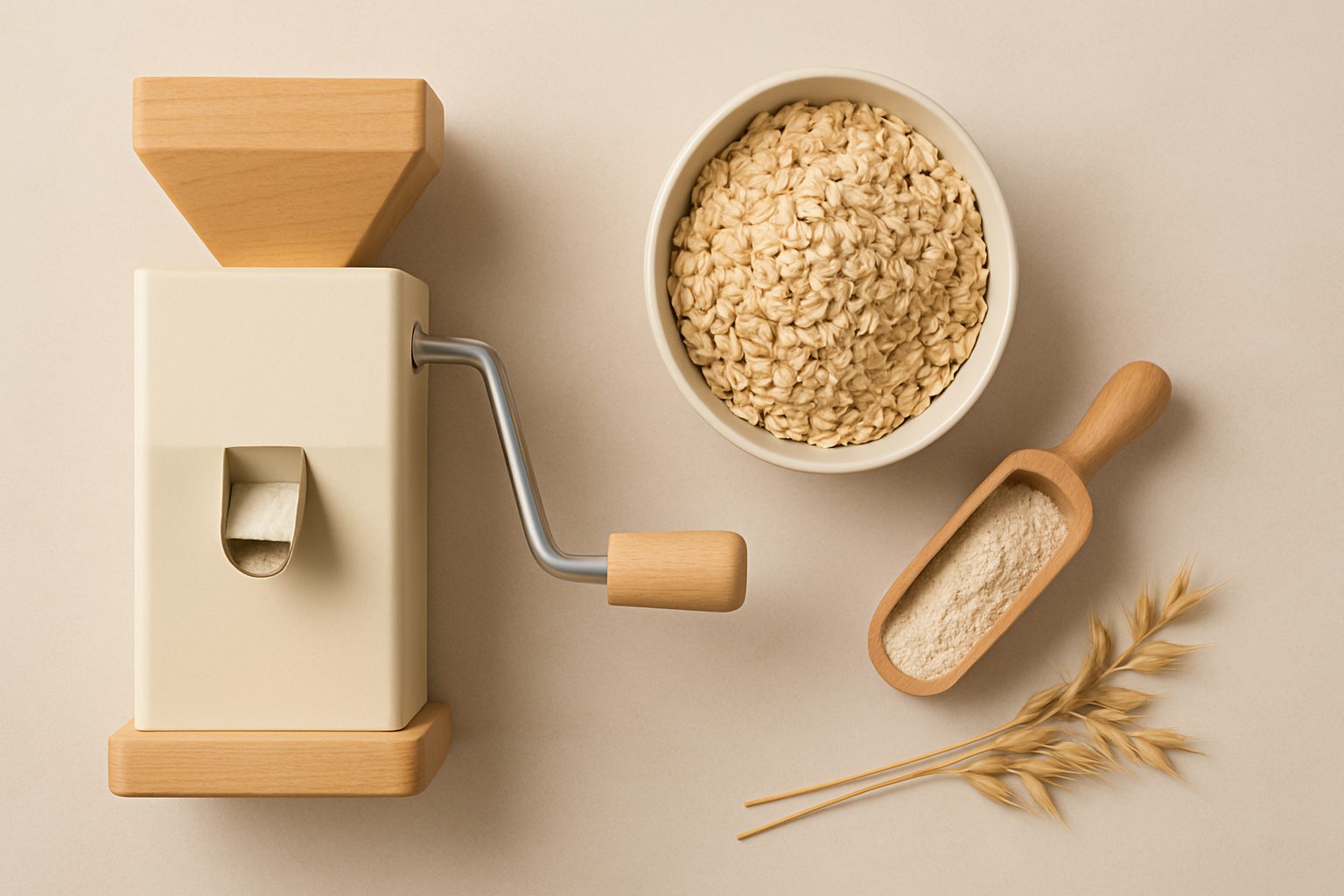
Hawos vs Eschenfelder Grain Roller UK: Head-to-Head Review
If you're serious about milling your own grains at home, you've probably narrowed it down to these two German manufacturers. Hawos and Eschenfelder dominate the hobby miller market in the UK, and for good reason—both build robust, long-lasting mills. But they're not interchangeable, and the right choice depends on your throughput needs, budget, and how much noise you can tolerate.
The Core Difference
Hawos mills use a traditional roller mechanism with adjustable stone grinding wheels. You're buying into a direct-drive, no-nonsense approach that's been refined over decades. Eschenfelder, particularly their Magic Mill range, combines a roller with a stone mill hybrid design in some models, giving you flexibility across grain types without changing stones.
For UK buyers, the practical difference matters: Hawos excels if you're grinding the same grain types repeatedly. Eschenfelder shines if you want to switch between wheat, oats, barley, and specialty grains without faffing about with settings.
Build Quality and Design
Both brands use German engineering and source quality components, so longevity isn't a gamble with either.
Hawos mills are heavier, more compact, and sit lower on the counter—better if you're space-conscious and prefer a dedicated milling station. The Hawos Novum, their entry-level roller, weighs around 5kg and has a footprint of roughly 20 × 15cm. It's built like a tank; the adjustable stone rollers are replaceable, and the motor is separate, reducing vibration through the grinding chamber itself.
Eschenfelder's Magic Mill models are slightly bulkier and sit taller. The trade-off is better ergonomics if you're regularly swapping grain hoppers or adjusting consistency. Some Eschenfelder models include adjustable roller gaps with a lever system rather than a dial, which some users find more intuitive.
Both come with UK plug adapters as standard now, so that's not a deciding factor.
Grinding Capacity and Throughput
This is where they diverge most meaningfully.
The Hawos Novum processes around 50–70g of grain per minute depending on fineness and grain type. If you're milling for a family of four weekly, expect 45 minutes to an hour to grind your week's grain (roughly 1kg). The Novum's hopper holds about 300g, so you'll refill it 3–4 times for a typical batch.
Eschenfelder's Magic Mill Standard runs faster—roughly 100–150g per minute—thanks to a more aggressive roller design. Same 1kg batch now takes 10–15 minutes. For serious hobby bakers or anyone supplementing commercial flour, that's a meaningful difference. The downside: Eschenfelder mills are noisier at this speed (more below).
If you're milling more than 2kg per week, Eschenfelder's throughput advantage compounds quickly.
Noise Levels
This matters more than most reviews acknowledge, especially in terraced houses or open-plan kitchens.
Hawos mills run at a steadier, lower pitch—roughly 75–80 decibels at full throttle. It's noticeable but not intrusive; you can hold a conversation standing next to the mill. The sound is a consistent grinding whir, which many find less jarring than variable noise.
Eschenfelder mills run hotter at the rollers and produce a higher-pitched whine, typically 80–85 decibels. Sustained use (30 minutes or more) can feel fatiguing. Early-morning milling before the household wakes might not be realistic if you're running an Eschenfelder for a full batch.
If noise is a dealbreaker, Hawos wins outright.
Warranty and Support
Hawos offers a two-year warranty on all electrical components and rollers, with European parts availability straightforward. UK distributors honour the warranty; if a motor fails, replacement is usually a 5–7 day turnaround.
Eschenfelder also offers two years, with slightly better UK retailer support in some regions (their Magic Mill range is more commonly stocked). Both companies back their mills well, though Hawos has a narrower UK distributor network—you may need to wait slightly longer for specialist parts.
For after-sales, it's a wash. Both have been in business for 40+ years and service their older mills.
The Verdict
Choose Hawos if:
- You're milling 500g–1kg per week
- Noise matters in your kitchen or household
- You prefer simplicity and consistency
- Budget is tight (Hawos mills are typically £150–250)
Choose Eschenfelder if:
- You're milling 2kg or more weekly
- You regularly switch between grain types
- Faster processing is worth the noise trade-off
- You're prepared to spend £250–400
In practice, most UK home millers start with Hawos. The Novum is reliable, uncluttered, and doesn't demand much attention. If you later find yourself milling 20kg monthly or experimenting with specialty grains constantly, you'll have outgrown it—and that's exactly when upgrading to Eschenfelder makes sense.
Neither mill will let you down. The question is whether you value speed and versatility or simplicity and quiet. For a first serious mill, Hawos edges ahead for most home bakers.
More options
- Electric Home Grain Flaker / Roller (Amazon UK)
- Manual Grain Roller for Home Use (Amazon UK)
- KitchenAid / Stand Mixer Grain Roller Attachment (Amazon UK)
- Eschenfelder Grain Flaker (Amazon UK)
- Whole Grain Oats & Wheat Berries (consumable upsell) (Amazon UK)